Research

  1. Chemical reaction dynamics and velocity-map imaging
  2. Imaging mass spectrometry
  3. Cavity ringdown spectroscopy for microfluidics applications
  4. Supercontinuum light in cavity enhanced spectroscopies

Chemical reaction dynamics and velocity-map imaging

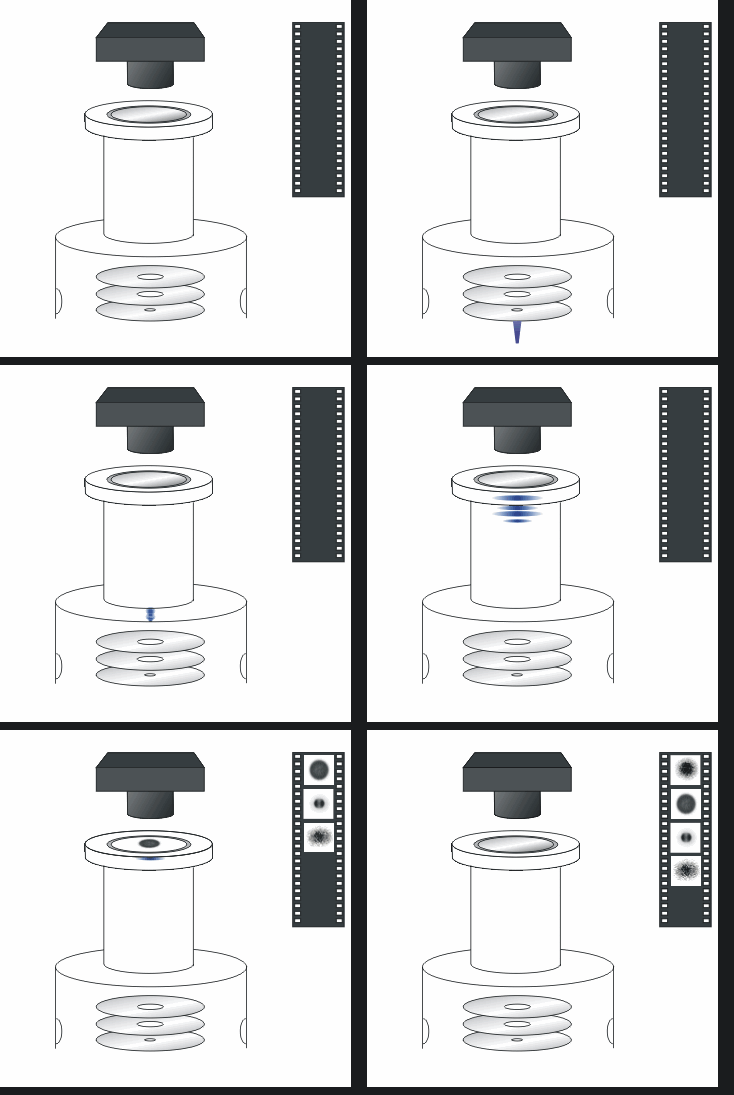
The aim of experiments in chemical reaction dynamics is to understand the basic physics (i.e. the forces and energetics) that govern chemical reactivity. A brief introduction to chemical reaction dynamics, written for undergraduates at Hertford College, can be found here. Reaction dynamics experiments are the chemist's version of the types of scattering experiments carried out by physicists at large facilities such as CERN. Physicists smash protons and other particles together at energies high enough to overcome the forces holding the particles together, and then measure the scattering distributions of the new particles formed in the collision. Chemists study scattering processes involving atoms, molecules, and photons, and record the scattering distributions of the molecular fragments produced. Breaking a chemical bond requires an energy of only a few electron volts (eV), as opposed to the collision energies of around 14 TeV employed at the Large Hadron Collider. These energies are easily accessible in the lab using molecular beam or laser techniques. In our experiments, the reactants are prepared in a molecular beam. The supersonic jet expansion process in which a molecular beam is formed leads to internally cold molecules with well defined velocities. The next step is a laser pump-probe cycle, in which a first laser pulse initiates reaction and a second pulse a short time later ionises one or more of the products. The ionisation process has a negligible effect on the motion of the product molecules, so the scattering distribution is conserved. The ions are then detected using velocity-map imaging, a technique that combines a carefully tuned extraction field with position-sensitive detection to record a two-dimensional projection of the full 3D scattering distribution. The very short timescale of a single laser pump-probe cycle (a few nanoseconds) allows us to measure properties of the reaction products before they undergo secondary collisions that could change their quantum state or velocity.

          Click here for an animation of the experiment

Using this approach, we have looked at a wide range of elementary gas-phase photodissociation processes and bimolecular reactions. Many have involved small molecules of interest in atmospheric and combustion chemistry e.g. the unimolecular photodissociation of Cl2, O2, NO2, N2O, O3, SO2, NOCl and CH3S2CH3, and a series of bimolecular reactions between atomic chlorine and the hydrocarbons methane, ethane and n-butane. We are now moving towards looking at larger molecules of interest in organic chemistry and mass spectrometry. We can probe several aspects of the collision dynamics:

  1. Product quantum states: are there marked deviations from a thermal distribution?
  2. Product velocity distributions: does the collision energy appear in product translation or internal excitation?
  3. Product angular distribution: are the products forward, backward, or isotropically scattered?
  4. Product angular momentum: does the product have 'frisbee', 'propeller' or 'cartwheel' type motion? Is the electronic angular momentum polarised?

Using unpolarised light, we are able to probe product quantum state and speed distributions. With polarised pump radiation we can access the product angular distribution, and with polarised pump and probe radiation we can also infer details of product angular momentum polarisation (for atomic products this yields the electron density distribution, essentially allowing us to 'image a wavefunction').

As an example, some images from a photodissociation experiment on the triatomic molecule NOCl are shown below. These images represent 2D projections of the scattering distribution, recorded in various experimental geometries defined by the propagation and polarisation directions of the pump and probe lasers, for ground and spin-orbit excited Cl atoms produced in the photolysis. The radial coordinate (product speed distribution) contains information on the energy released in the reaction and whether it ends up as translational kinetic energy or internal excitation of one or both fragments, while the angular coordinate contains information on the symmetries of the electronic states accessed during the dissociation.

We collaborate with a number of other research groups within the UK and Europe, including the group of Mark Brouard in Oxford, and Dave Parker at the Radboud University of Nijmegen. We are also part of the ICONIC European network and the Bristol and Oxford chemical dynamics group.

Imaging mass spectrometry

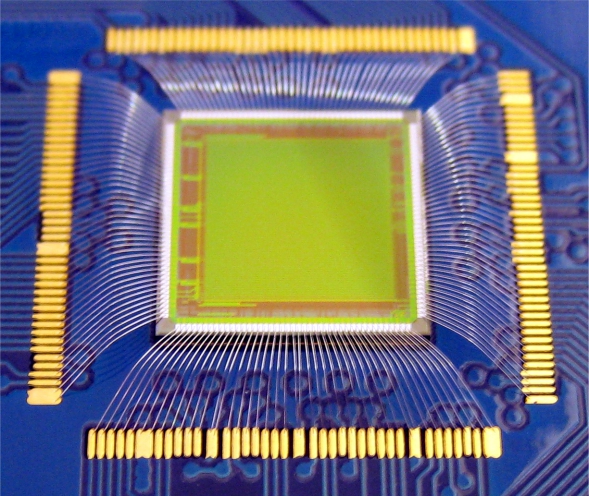
Velocity-map imaging has truly captured the imagination of the reaction dynamics community, but has so far remained confined to this field. We are extending the imaging technology used in reaction dynamics studies to develop a new type of time-of-flight mass spectrometer, which, in addition to the conventional mass spectrum, will record the complete velocity or spatial distribution of each ionic species at its point of formation. You can see a photo of the new spectrometer at the top of the page, and an animation of the experiment below.

          Click here for an animation of the multimass imaging experiment

The computer simulations below show that for an initial ion distribution having both a spread of positions and a spread of velocities, the ion optics may be tuned either for spatial mapping (in which the positions of the ions are recorded, regardless of their initial velocities) or for velocity mapping (in which the velocities of the ions are recorded, regardless of their initial positions).

In spatial-map imaging mode, imaging mass spectrometry has the potential to identify, with high lateral resolution, the many molecular constituents that may be present at a surface. It therefore has potentially exciting applications in surface analysis or as a high-throughput detection method in the mass analysis of spatially-resolved arrays of samples. ‘Soft’ laser-based ionization methods such as MALDI (matrix assisted laser desorption ionization) and DIOS (desorption ionization on silicon) are prime candidates for our imaging modality. Both of these techniques yield gas-phase ions from molecular species on a surface without fragmentation, making spatial-map imaging mass spectrometry a promising avenue for the molecular analysis of biological samples.

Velocity-map imaging has been used with great success in the field of small-molecule reaction dynamics to study molecular photofragmentation events. The velocity distributions of fragment ions are highly sensitive to the detailed dynamics of the fragmentation process, and in many ways provide a 'fingerprint' for the parent molecule. This property is potentially of considerable use in mass spectrometry. As an example, the figure below shows the highly distinctive velocity distributions recorded for several fragment ions arising from the 193 nm photodissociation of dimethyl disulphide, CH3S2CH3.

In biological mass spectrometry, proteins and peptides are often studied via their fragmentation mass spectra following collision- or radiation-induced dissociation. We hope that the extra dimensions of information available in imaging mass spectrometry will yield significant structural and conformational information on the parent molecule and allow the mechanisms and dynamics of fragmentation processes to be probed, as well as providing a unique multi-dimensional ‘fingerprint’ that may be used in molecular identification.

One of the challenges in implementing imaging mass spectrometry lies in developing fast cameras or image sensors capable of recording images of many molecular fragments on the microsecond time scale of a time-of-flight cycle. We are working together with Andrei Nomerotski of Oxford Physics and Renato Turchetta's group at the Rutherford Appleton Lab to develop this technology.

Modern state-of-the-art mass spectrometry has found a bewildering array of applications, covering areas as diverse as the identification and structural analysis of proteins, peptides and oligonucleotides; drug discovery, pharmacokinetics; breath gas monitoring; quality control; reaction kinetics measurements; quantitation of complex chemical mixtures; and geochemical and archaeological dating. In the important emerging field of proteomics, mass spectrometry is literally driving biological discovery, and there is an ever increasing demand for innovation in instrument design that will allow molecular structures to be probed in more detail. We hope that our work will contribute to these developments.

Cavity ringdown spectroscopy for microfluidics applications

Miniaturisation has revolutionised the world of electronics, with processing power that once required a room full of the latest in technology now existing on a small microchip. Such miniaturisation is also possible in chemistry, embodied in the fields of 'lab-on-a-chip' chemistry and micro total analysis systems (&mu TAS). There is currently a great deal of research aimed at developing microfluidic chip devices, which integrate a raft of laboratory functions (sample preparation, mixing, reaction, separation etc) onto a plastic or glass chip a few centimetres in size. There are numerous advantages to scaling down chemistry in this way. For a start, only tiny sample volumes are required. This is of particular importance for biological samples, which can often only be prepared in very small amounts, but the small volumes of reagents also mean that chip-based chemistry is often inherently safer than larger-scale approaches. There are considerable financial savings associated with the low chip fabrication costs and minimal reagent use. Chemical tests can be miniaturised and made portable, and there is the potential for very high throughput, with many experiments or reactions being run in parallel. Such attributes mean that lab-on-a-chip approaches hold great promise for a range of applications in medical diagnostics, forensics, environmental monitoring, and synthetic chemistry. However, in addition to the positive qualities outlined above, there are also considerable technological challenges associated with chip design and implementation.

One of the key challenges is the development of detection techniques that can be interfaced to a microfluidic chip. At present, while reactions may be run on the chip, the products are often analysed 'off-chip' by standard techniques such as high pressure liquid chromatography (HPLC) or gas-chromatography mass spectrometry (GCMS). An 'on-chip' technique needs to be sensitive enough to detect and identify molecules in the tiny (picolitre or less) sample volumes found on a typical chip, and must also be capable of physically interfacing to the chip. We are investigating the application of cavity-ringdown spectroscopy (CRDS) to this problem. These techniques employ an optical cavity to achieve extremely long absorption path lengths, leading to exquisite detection sensitivities, within a compact experimental footprint. An optical cavity is an arrangement of optical components designed to 'trap' light for a period of time through multiple reflections. We are investigating both simple two-mirror cavities and fibre-loop cavities. Fiber-loop cavities rely on total internal reflection for their operation, and have the advantage of a much broader bandwidth than two-mirror cavities, in which the dielectric mirrors are generally optimised for ultra-high reflectivity over a narrow bandwidth. The basic setup for cavity ringdown spectroscopy using a two-mirror or fibre-loop optical cavity is shown below (with a very schematic microfluidic chip as the sample!):
In two-mirror CRDS, a pulse of laser light is incident on the first cavity mirror of reflectivity R, and a small fraction (1-R) is coupled into the cavity and undergoes repeated reflections between the mirrors. On each reflection, a small amount of light is transmitted through the mirror, and a photodetector situated behind the second mirror records the exponential decay of this 'leaking' light, which is proportional to the intensity decay of the light trapped in the cavity. The time constant of the exponential decay, often referred to as the 'ringdown time', &tau, depends only on the reflectivity of the cavity mirrors and the length of the cavity. However, if an absorbing species is admitted to the cavity, this represents an additional source of loss, a correponding decrease in the time constant, and a means for measuring the absorptivity of the sample. Recording the ringdown time as a function of laser wavelength allows an absorption spectrum to be measured.

In fibre-loop ringdown (FLCRDS), light is coupled in and out through the side of the fibre and the sample is placed either in a small gap in the loop (direct absorption), or near a tapered region of the fibre (evanescent absorption). In this case the short duration of the laser pulse relative to the round-trip time of the fibre loop cavity means that instead of a continuous ringdown signal, individual light pulses are recorded as the light packets pass the detector on each circuit. Preliminary FLCRDS measurements on organic dyes have demonstrated a detection limit of around 1x10⁹ molecules in a sample volume of approximately 0.5 pL. We are currently working on interfacing both FLCRDS and more conventional two-mirror CRDS with microfluidic chips in a range of experimental configurations.

This work is being carried out in collaboration with the group of Joao Cabral at Imperial College London, and with Elizabeth Farrant and Adrian Wright at Pfizer Research and Discovery in Sandwich, Kent.

Supercontinuum light in cavity enhanced spectroscopies

Supercontinuum light is a fairly new development in optics, generated by passing monochromatic light from a pulsed laser through a non-linear medium. A supercontinuum light source combines a broad, flat spectral distribution with an intensity that is orders of magnitude higher than conventional thermal white light sources. It also has a high degree of spatial coherence that allows focusing to a tight spot or collimation into a narrow beam. In many ways, such sources essentially constitute 'white light lasers'.

In our supercontinuum source, shown schematically below, broadband light is generated in a length of non-linear photonic crystal (microstructured) fibre pumped by the focussed output of a microchip Nd:YAG laser. A variety of non-linear effects in the fibre broaden the 1064 nm pump radiation into a continuous spectrum spanning the range from around 450 to 1800 nm, while at the same time preserving the spatial coherence of the light. Two different pump laser configurations allow us to generate either 1 ns pulses with an energy of around 3 microjoules, or 7 ns pulses with an energy of around 30 microjoules. The image on the right hand side of the figure shows a supercontinuum pulse projected onto a screen after dispersion through a prism.

The availability of supercontinuum light opens the way to a wide range of applications in laser spectroscopy, either by using the entire broadband pulse or by combining the source with a monochromator or optical filters to create a simple and widely tuneable source of coherent light. We are exploring applications in the field of cavity-enhanced spectroscopy. For example:

  1. Broadband cavity ringdown and cavity enhanced spectroscopy (CRDS and CEAS), in which we attempt to acquire a 'complete' absorption spectrum (i.e. spanning the range of wavelengths supported by the cavity) in a single laser shot.
  2. CRDS and CEAS for online measurements in microfluidic systems.
  3. Optimisation of light scattering measurements for particle detection.